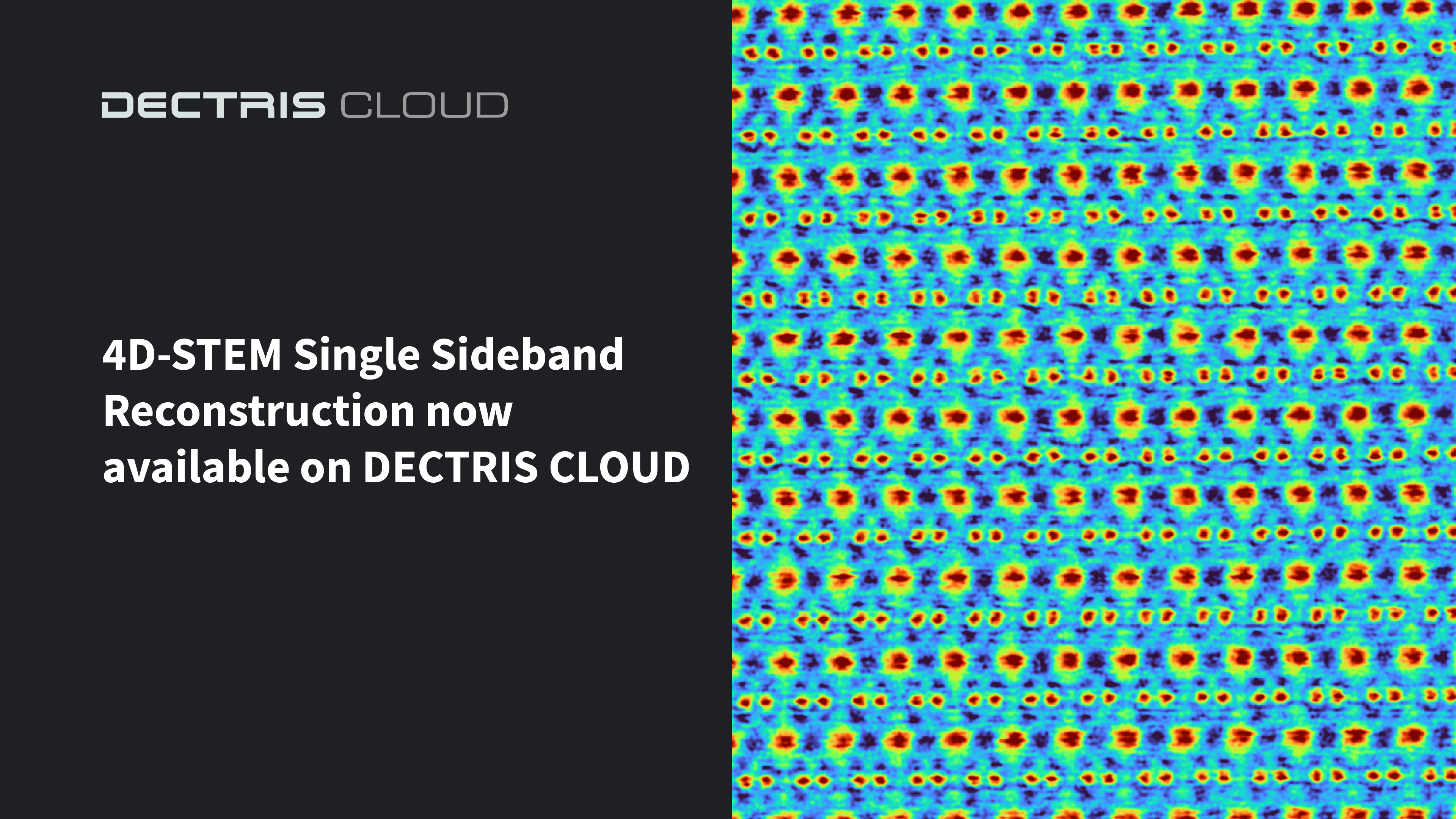
What is a Single Sideband (SSB) Reconstruction?
Ptychography is a computational method that uses the overlap between adjacent electron probe positions to mathematically reconstruct the phase of the sample. While iterative algorithms are very powerful, they are computationally expensive and often require fine-tuning of dozens of parameters.
Single Sideband (SSB) ptychography takes a different, more direct path. By isolating specific sidebands in the interference pattern between the unscattered central beam and the diffracted waves, SSB can directly calculate the sample's phase.
Why choose SSB?
- Speed: As a direct method, it is orders of magnitude faster than traditional ptychography providing fast-feedback for the scientists at the microscope.
- Dose Efficiency: It excels at low electron doses, making it the gold standard for beam-sensitive samples.
- Super-resolution: It allows you to recover information beyond the physical aperture of your microscope, effectively "sharpening" your vision.
Streamlining 4D-STEM on DECTRIS CLOUD
Processing 4D-STEM data traditionally requires high-end GPUs and complex local software installations with a huge number of ever-changing dependencies. The 4D-STEM Single Sideband Job Template on DECTRIS CLOUD removes these barriers.
1. Automated Data Handling
No matter if your data comes from a DECTRIS ARINA or QUADRO, the cloud environment handles the heavy lifting of data streaming for any kind of data source. You don't need to worry about moving terabytes of files to a workstation - the compute power is right where the data lives. Right at the scale you need.
2. Simple Configuration
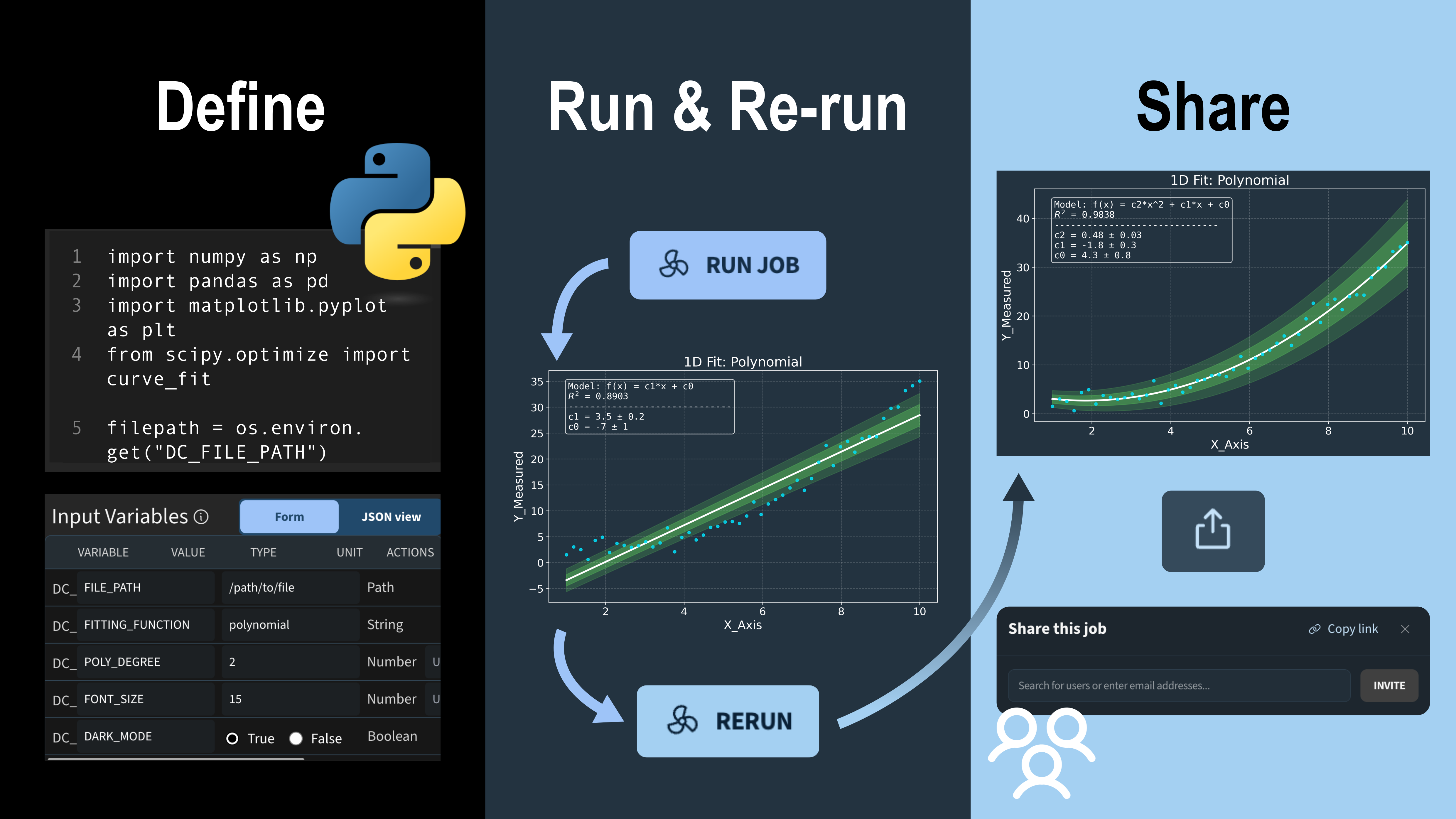
The SSB Job is designed for scientists, not just programmers. You simply define your:
- Convergence Angle: The size of your electron probe.
- Sampling: The real-space pixel size of your scan.
- Sideband Selection: Choose the optimal frequency range to maximize contrast and minimize noise.
3. Reproducibility by Design
In DECTRIS CLOUD, every reconstruction is logged. If you find the perfect settings for a specific sample, you can "clone" that job for your next ten datasets years down the road. No more guessing which version of a script you used six months ago.
Ready to try it on your own data?
![Transition from raw detector images to electron density maps and refined atomic models in Coot. Depicted data is from the 7QNP dataset [14]. The 3D molecule rendering has been produced with the Render Molecule job template, which utilizes the MolecularNodes Blender plugin developed by Brady Johnston.](https://cdn.prod.website-files.com/670f957a3be26367c038245d/69c698806079c5f5265daa1a_thumbnail_v3%20(1).png)