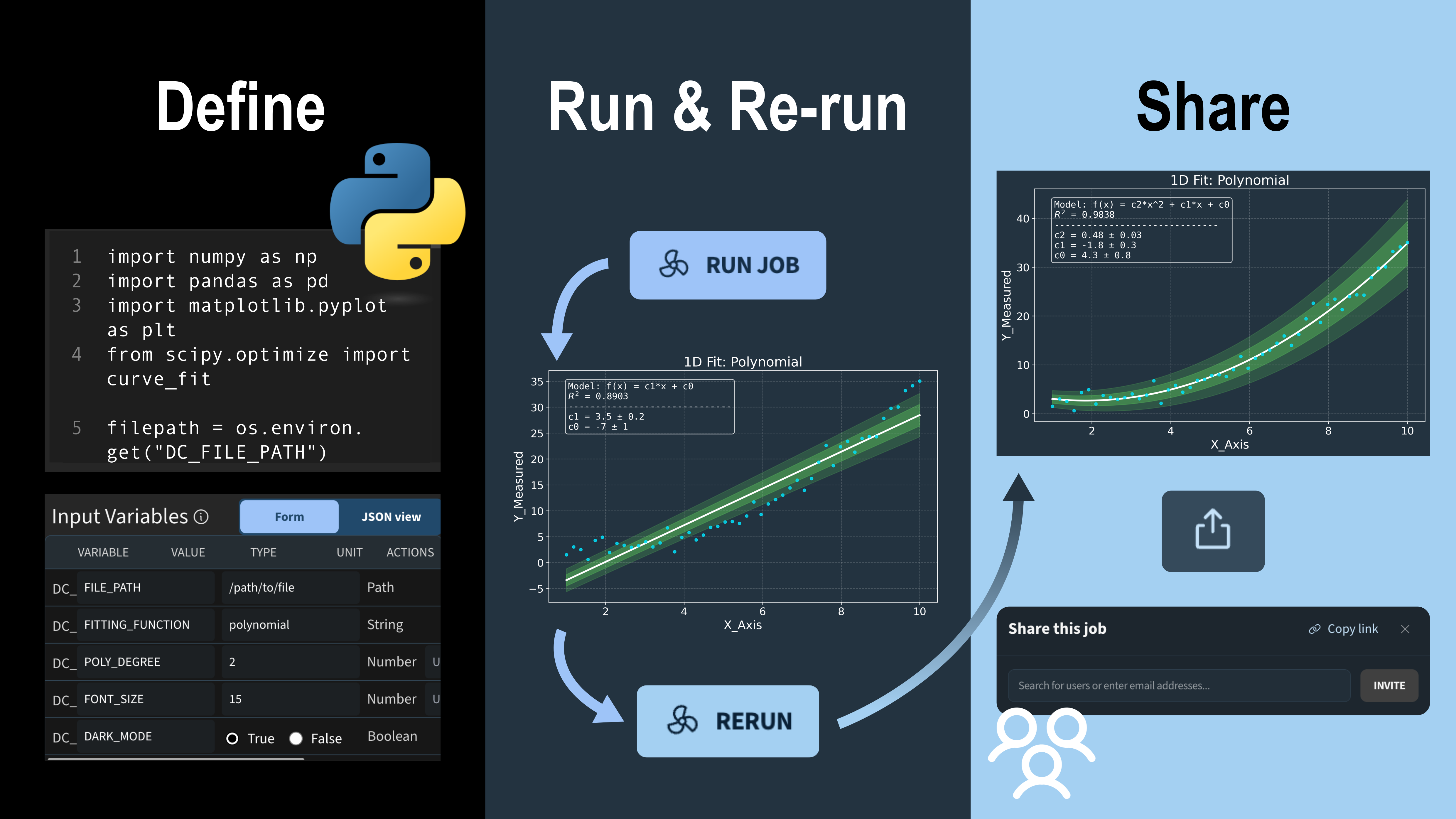
Across scientific disciplines, research workflows are becoming increasingly complex. Researchers must manage intricate software stacks, large datasets, and growing compute requirements, while still ensuring their work remains reproducible and easy to share.
DECTRIS CLOUD was built to support this reality. By combining data management, reproducible environments, and scalable compute in a single platform, it enables scientists from different domains to work efficiently while still supporting highly specialized workflows.
In this post, we highlight a particle physics use case from Philip Ploner, a student at ETH Zürich, who has used DECTRIS CLOUD to run large-scale simulation workflows for high-energy physics research. See his presentation from a recent DECTRIS CLOUD power user meeting below:
or follow the link here for a full recording, including a general introduction to DECTRIS CLOUD.
Particle Physics Simulation Workflows for Machine Learning Input
Experiments at CERN’s Large Hadron Collider generate enormous volumes of data, with hundreds of millions of proton–proton collisions occurring every second. Because only a tiny fraction of these events can be stored long term, experiments rely on triggering systems that decide, in real time, which data to keep and which to discard.
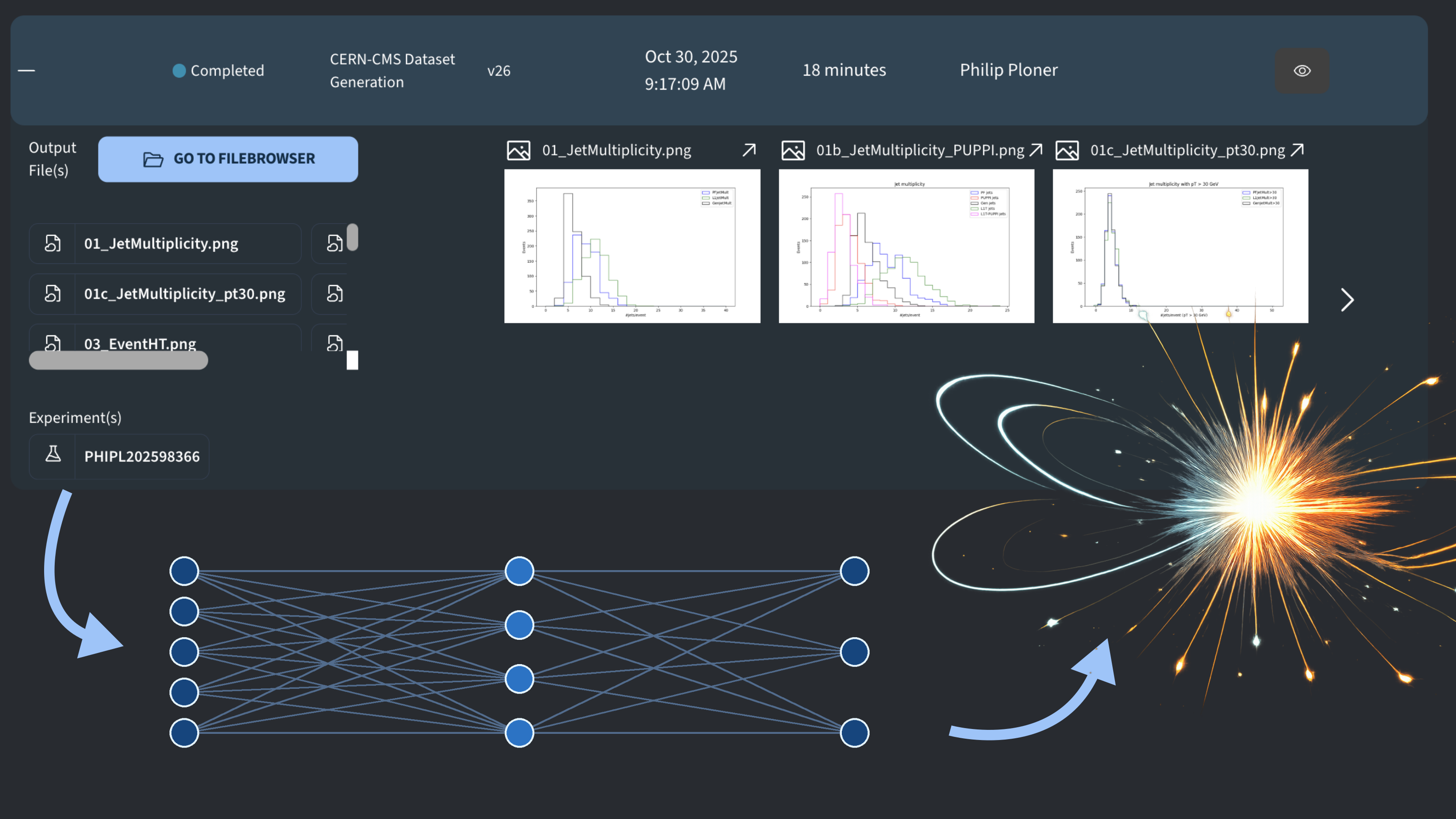
Simulation workflows play a critical role in this process. Large-scale simulations are used to generate labeled collision events that can be analyzed and used to train machine learning models. These models help make more refined trigger decisions, enabling researchers to identify subtle signatures that may be relevant for new physics.
Such simulation pipelines are complex and typically rely on multiple software tools, including MadGraph [1], Pythia [2], and Delphes [3], which are used together in Philip’s workflow. These tools must work in carefully configured environments, and ensuring that such workflows remain reproducible and easy to share across teams is a significant challenge, particularly as datasets and compute requirements continue to grow.
Reproducibility with Shared Environments
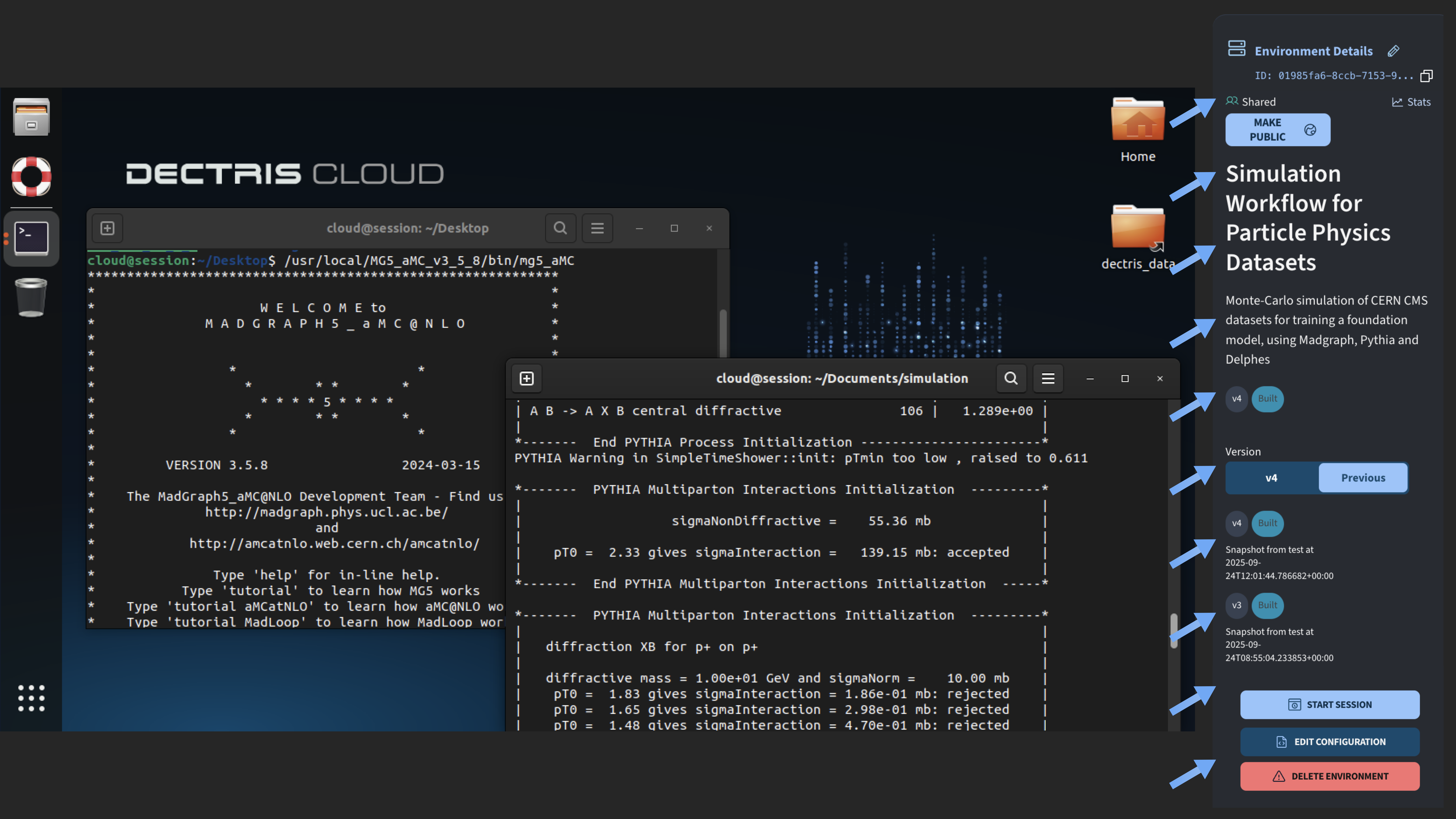
In DECTRIS CLOUD, Philip addresses this challenge by using containerized software environments to define an isolated and reproducible software stack for his simulations. An environment captures all required tools and dependencies and can be reused consistently across sessions and jobs.
Once created, environments can be shared with collaborators and are versioned automatically. This ensures that simulations can be rerun at any time using the exact same setup, removing common issues related to local installations or incompatible software versions.
From Code to Reusable Job Templates
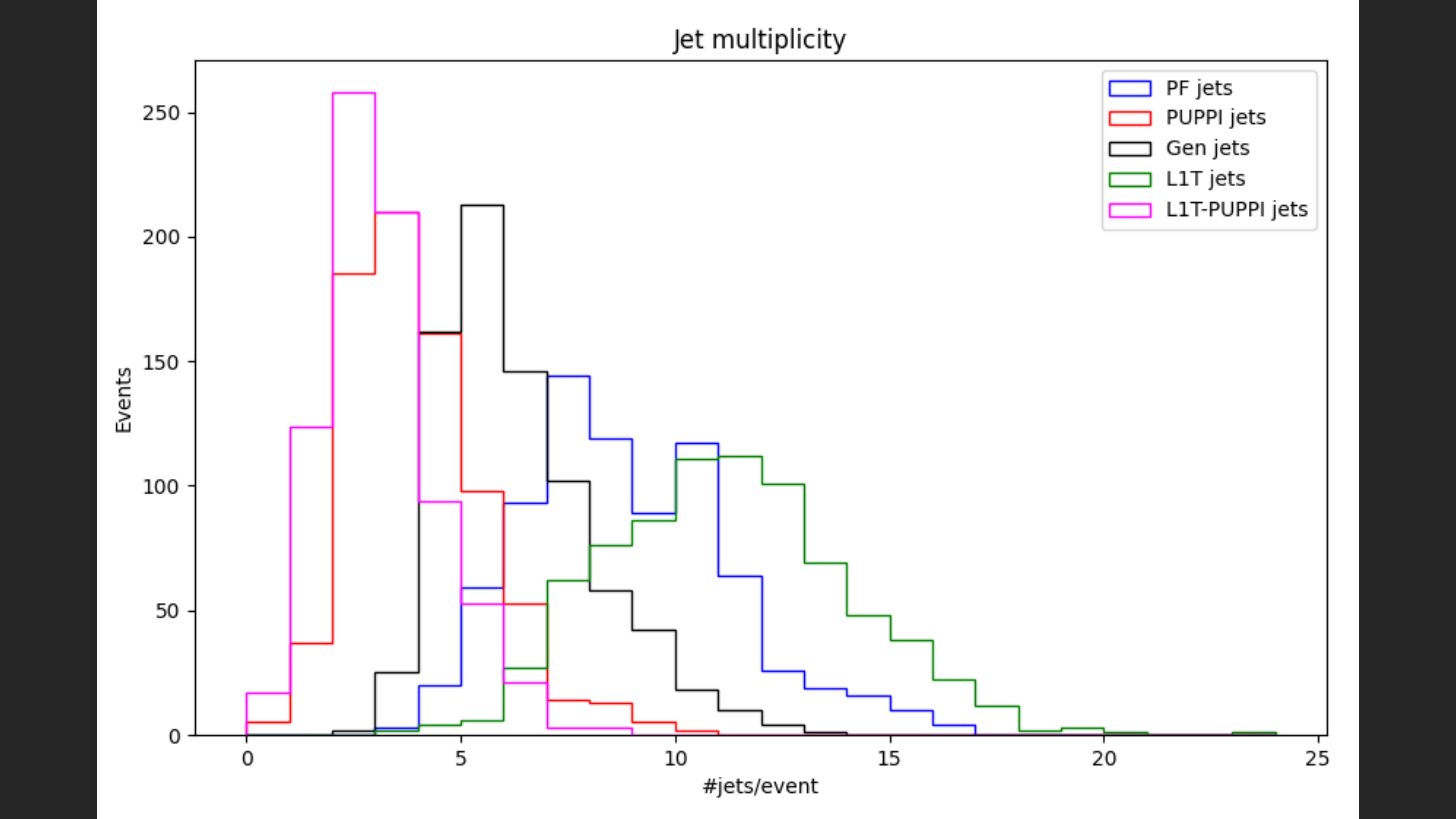
With the environment in place, Philip created a job template to make the simulation workflow easy to run and reuse. Job templates expose key parameters, such as the number of simulated events, the physics process, and random seed, directly in the DECTRIS CLOUD interface.
This allows simulations to be launched with just a few clicks on scalable compute resources. Results, including validation plots and output datasets, are returned directly to the platform and remain fully reproducible, since the software environment and input data are preserved.
With the simulation results generated in DECTRIS CLOUD, Philip will continue his work with developing machine learning methods for improved triggering decisions while working under the supervision of Dr. Thea Aarrestad at ETH Zürich.
References
[1] Alwall, J., Frederix, R., Frixione, S., Hirschi, V., Maltoni, F., Mattelaer, O., Shao, H.S., Stelzer, T., Torrielli, P. and Zaro, M., 2014. The automated computation of tree-level and next-to-leading order differential cross sections, and their matching to parton shower simulations. Journal of High Energy Physics, 2014(7), pp.1-157.
[2] Bierlich, Christian, et al. "A comprehensive guide to the physics and usage of PYTHIA 8.3." SciPost Physics Codebases (2022): 008, arXiv:2203.11601 [hep-ph]
[3] De Favereau, J., Delaere, C., Demin, P., Giammanco, A., Lemaitre, V., Mertens, A. and Selvaggi, M., 2014. DELPHES 3: a modular framework for fast simulation of a generic collider experiment. Journal of High Energy Physics, 2014(2), pp.1-26.
![Transition from raw detector images to electron density maps and refined atomic models in Coot. Depicted data is from the 7QNP dataset [14]. The 3D molecule rendering has been produced with the Render Molecule job template, which utilizes the MolecularNodes Blender plugin developed by Brady Johnston.](https://cdn.prod.website-files.com/670f957a3be26367c038245d/69c698806079c5f5265daa1a_thumbnail_v3%20(1).png)